Back to Blog Home Page
I’ve spent most of my career building companies from the ground up and have seen firsthand just how critical hiring is to a company’s success. For example, I hired Matt Glickman early on when building ReSci and used Lever for 6 years! The people you bring in shape your culture, your velocity, and your outcomes. Get it right, and things click. Get it wrong, and you feel it fast.
That’s what led to people actually. This podcast is, in many ways, a personal journey. A chance for me to learn the ins and outs of HR and TA from the people who live it every day, and to create a space where their stories, perspectives, and challenges are heard.
Now that we’ve got a few episodes live, I figured I’d make it easier to keep up. This blog is the TL; DR—the biggest takeaways, the moments that stuck with me, and a clip from each episode worth watching.
Episode 1: You Learn a Lot About a Company by the Way It Hires
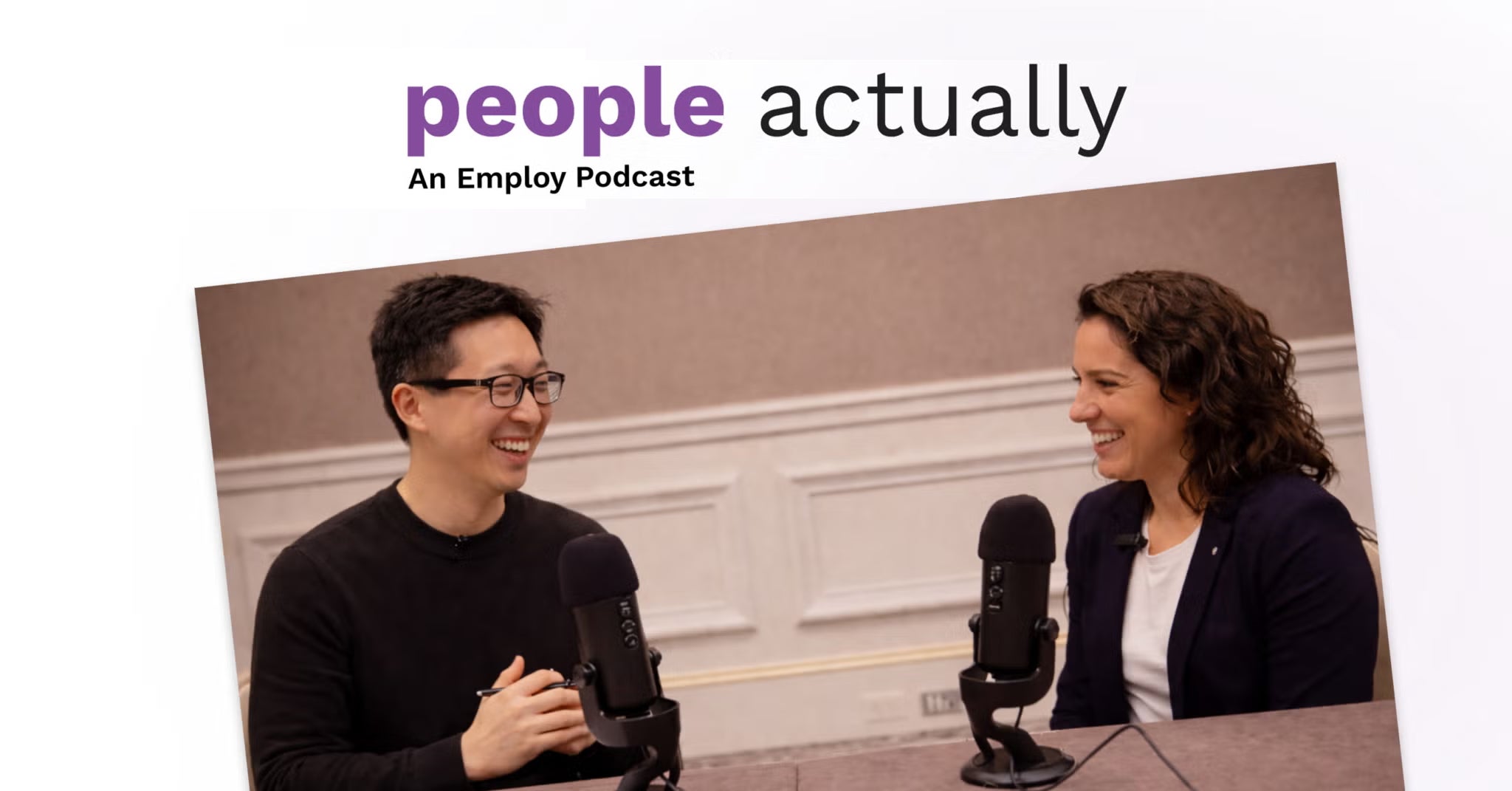
For our inaugural episode, Stephanie Manzelli, Chief People Officer at Employ, joined me for an interview with one of our own: Kim Stevens, Director of Talent Acquisition at Employ… who was brave enough to get candid with her two bosses.
This conversation focused on talent acquisition’s role as a strategic partner. We got into what happens when HR and TA aren’t in the decision-making room, the ripple effects of bringing them in too late, how TA can better align with leadership during the hiring process, and how teams can actually prove impact and ROI.
Here are the biggest takeaways from that conversation:
- TA can’t be an afterthought. Hiring doesn’t start when a role opens. It starts with workforce planning, budget, onboarding capacity, and org design. When TA is brought in late, everything downstream gets harder.
- Your hiring process is a signal. If your interview process keeps growing, that usually means the team isn’t aligned or doesn’t trust its own decision-making. Candidates can feel that. Clarity doesn’t just improve efficiency—it improves experience.
- If you value talent, show it. If TA and HR are only brought in to “process” hires, that’s a red flag. They’re not an admin function. They’re strategic partners, thinking about long-term outcomes and protecting the business.
- Good recruiting drives business outcomes. The goal of recruiting isn’t to “put butts in seats.” It’s to understand what the business needs, hire the right people to meet that need, and set them up to succeed once they’re in the door.
Watch Kim break down what your interview process tells candidates about your company (whether you want it to or not):
Listen to the full episode here.
Episode 2: You Might Be Hiring for Leaders Wrong (Here’s What Actually Matters)
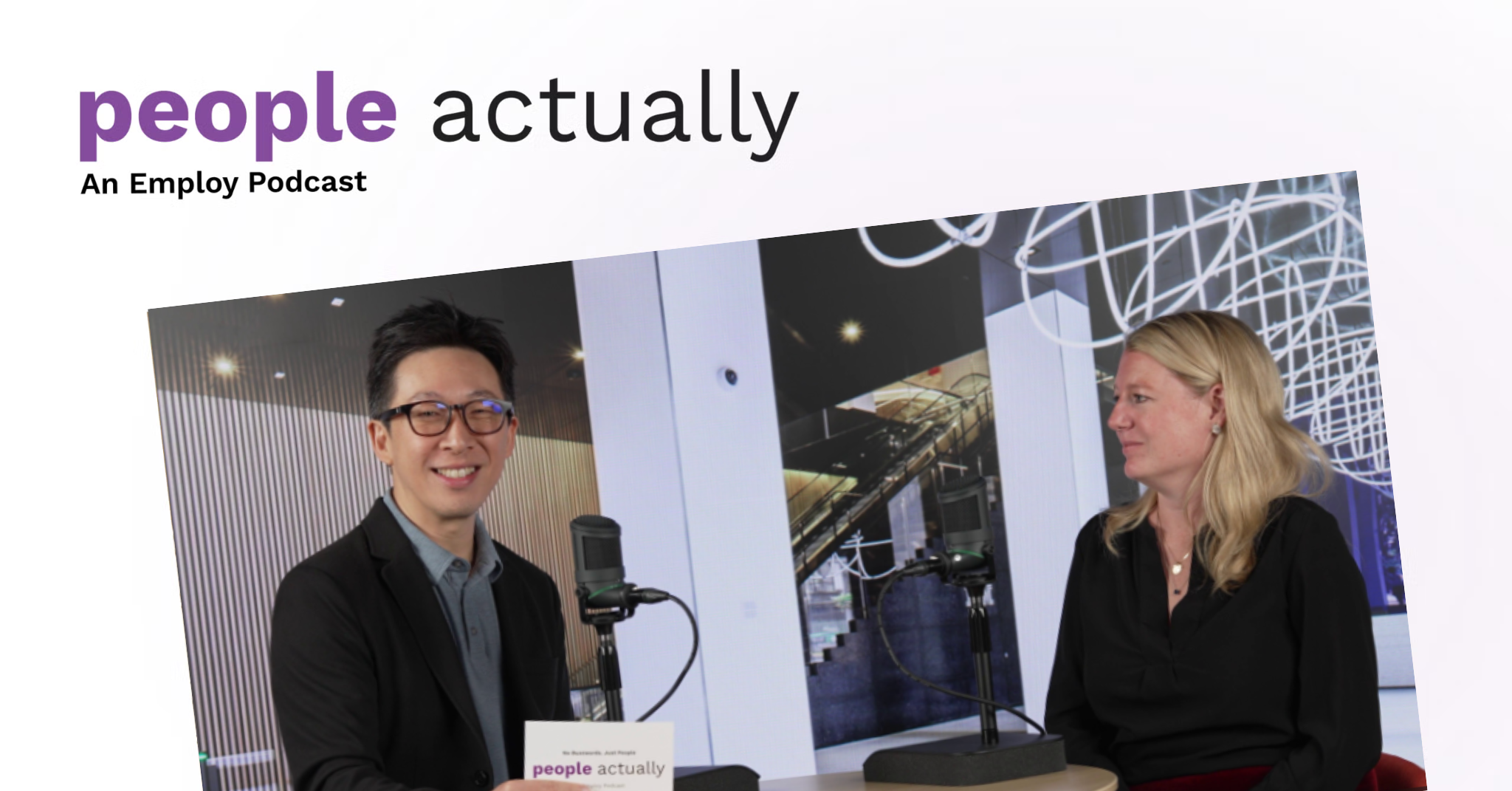
This episode was such a full circle moment. Our guest is the one who hired me, so getting to flip the script and interview her was especially fun.
Monica Sklover, Senior Manager, Executive Recruiting at K1, joined us to talk about executive recruiting and what separates great leaders from everyone else. We got into what she looks for when assessing talent, how opportunities really happen at that level, and how AI is starting to reshape how leaders work.
Here are the biggest takeaways from the conversation:
- Passion is the differentiator. At the executive level, every candidate can look strong on paper. What stands out is what motivates them, why they took their last role, and what they’re looking for next. When there’s real conviction behind those answers, it comes through quickly.
- Relationships are your secret weapon. Some of the best opportunities come from building long-term relationships, not last-minute networking. You can’t just show up when you need something and expect your network to come through. One of the strongest leadership signals? When a referral says: “I’d follow that person anywhere.”
- AI strengthens the signal, but it doesn’t replace it. AI can do a great job analyzing what’s on paper and surfacing patterns, giving recruiters a strong starting point. But the real value comes when that insight fuels deeper, human evaluation—how someone communicates, how they think, and how they lead in practice.
- Adapting is part of the job now. The strongest leaders are continuously learning how to use tools like AI, testing new approaches, and building the skills needed to lead in a changing environment—without waiting for someone to point the way.
Watch Monica talk about AI’s role in your recruiting toolkit:
Listen to the full episode here.
Episode 3: The Invisible Infrastructure Behind Great Hiring
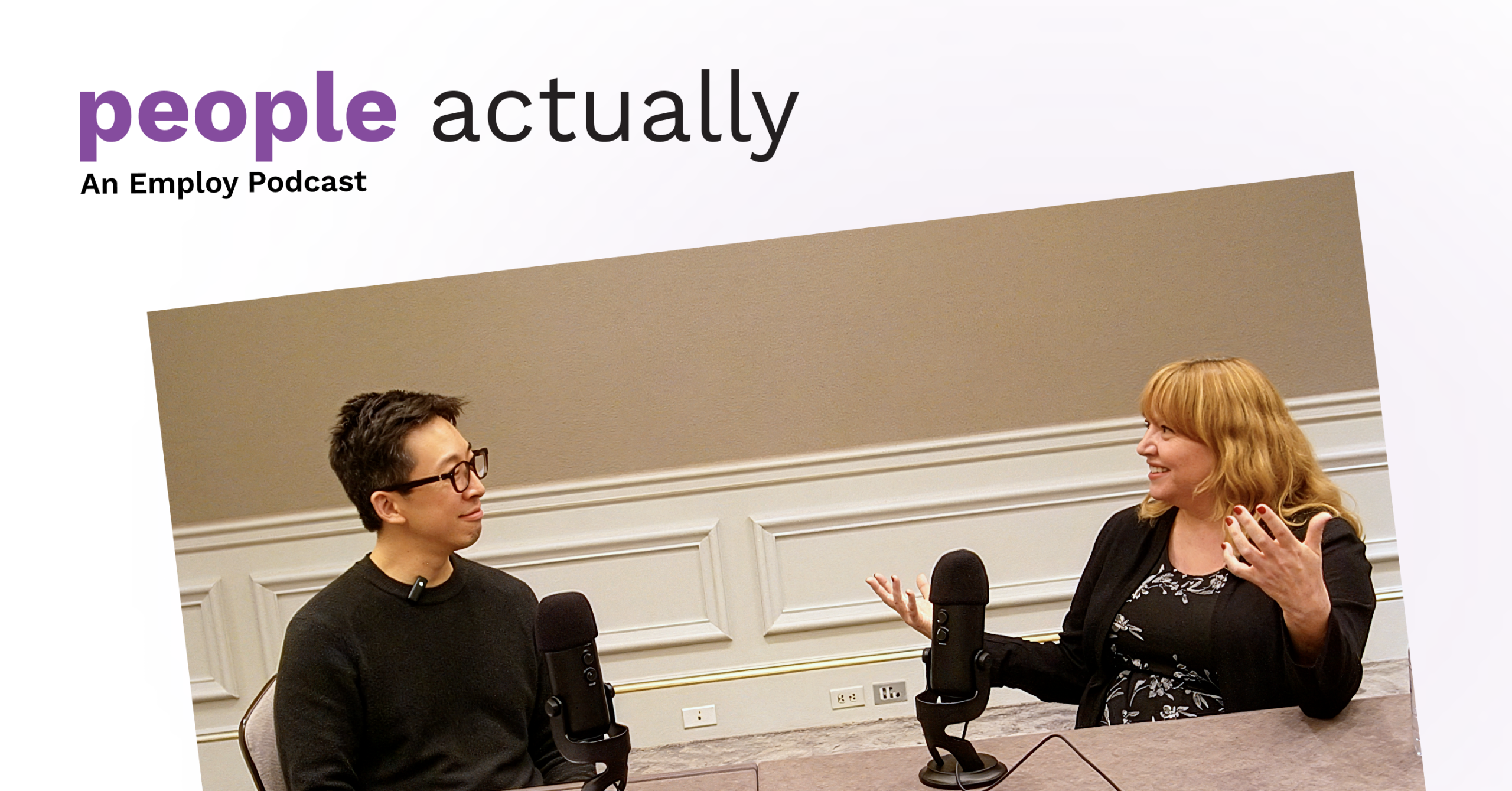
This episode features someone who’s quite literally in the business of making dreams come true.
Carissa Mueller is the Director of People Operations at DREAM Charter Schools, and she joined us to talk about what she calls the “invisible infrastructure” behind hiring and employee experience. The systems, workflows, and decisions that most people never see, but feel every day.
Here are the biggest takeaways from the conversation:
- Broken systems = broken experiences. Carissa shared a simple but telling example: an employee changes their name and updates it with IT, but HR is working in a separate system that doesn’t sync. When it’s time to send a renewal letter, it goes to the wrong inbox. That’s not a small glitch—it’s putting someone’s job at risk. That’s what “invisible infrastructure” really means.
- AI adoption starts with mindset. Instead of approaching AI from the angle of, “here’s the tool and here’s how to use it,” Carissa’s focused her innovation efforts on shifting how her team thinks about problem solving. The goal is to give people agency to identify inefficiencies in their workflows and figure out how to solve them.
- Great teams don’t avoid problems—they get better at solving them. One line Carissa said that stuck with me: “every day there’s a problem, and that’s not a bad thing.” The best teams don’t try to eliminate problems—they get really good at spotting them early, staying adaptable, and trusting they’ll figure it out.
- The best AI outcomes aren’t just speed. At DREAM, the focus isn’t just on using AI to do the same work faster—it’s what you do with that extra time. It’s about asking yourself: how can you do more? Do it differently? Do it better? How can you approach the problem in a completely new way?
Watch Carissa break down the DREAM team’s unique approach to AI training, and why it’s more sustainable long-term:
Listen to the full episode here.
Here’s to the People Behind the Process
In these first three episodes, we covered a lot of ground, but one thing kept coming up: hiring might look simple on paper, but there’s a lot happening behind the scenes that most people never see.
That showed up in different ways in each conversation:
- Kim talked about the strategic alignment that needs to happen before a role even opens, things like workforce planning, onboarding capacity, and budget.
- Monica gave a window into how leadership decisions get made, where passion matters more than what’s on paper.
- Carissa lifted the hood on the systems behind employee experience, and how small disconnects in the back end can create very real consequences for people.
And that’s really why this podcast exists. To spotlight the work these teams are doing every day that often goes unnoticed but has a huge impact on how companies actually run.
These episodes are just the beginning. Every week, we’ll be sharing more stories from more hiring heroes. To stay up to date with people actually, follow us here:
And if you’re a recruiter, TA pro, HR leader, or industry voice with a perspective to share, we’d love to have you on. Fill out this form and we’ll be in touch.